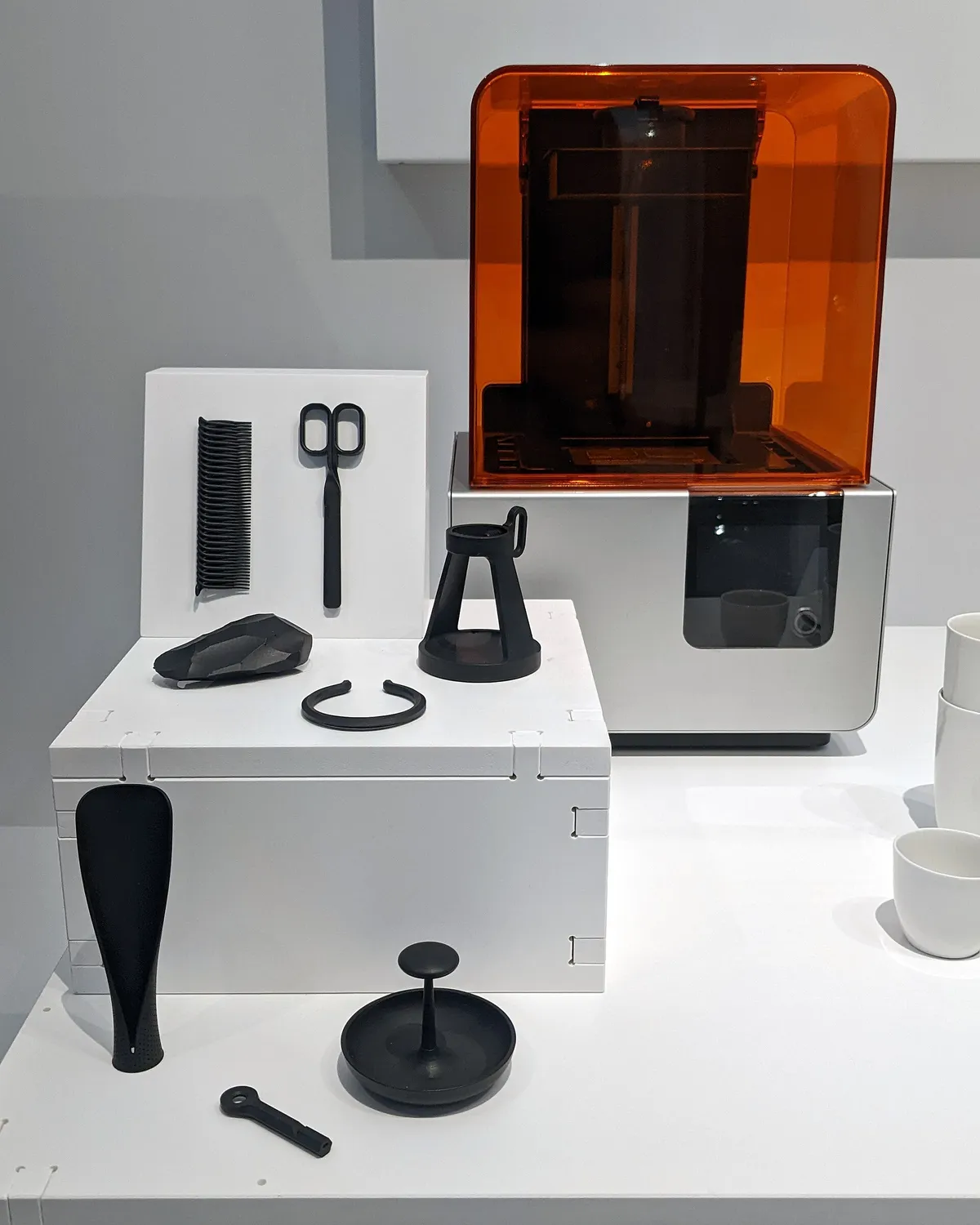
 A resin printer and parts printed on it. Photo: The wub, CC BY-SA 4.0, via Wikimedia Commons.
The choice of SLA resin matters more than is often assumed. The wrong resin cracks under load; the right one lasts for years.
Standard resin
Rigid, brittle, inexpensive. Suited to visual models, figurines, and prototypes that will not see mechanical stress.
- Price: $
- Shore hardness: ~85D
- Best for: display pieces, architectural models, presentation prototypes
- Not suited to: anything that is dropped, flexed, or loaded
Tough resin
Formulated to behave like ABS: less brittle, better impact resistance.
- Price: $$
- Tensile strength: ~40 MPa
- Best for: functional prototypes, snap-fit enclosures, consumer product mock-ups
- Note: still not as tough as sintered nylon. For parts that cycle under load, an FDM nylon or PETG print is the better option on this platform.
Flexible / elastic resin
Rubber-like feel; stretches up to 160%. Suppliers offer a range of hardnesses (30A to 70A Shore).
- Price: $$$
- Best for: gaskets, soft grips, wearables, cushioning parts
- Note: not as tear-resistant as silicone moulds.
Durable (polypropylene-like) resin
Low stiffness, high elongation; behaves like polypropylene.
- Price: $$$
- Best for: living hinges, snap caps, flexible clips
- Note: poor heat resistance.
High-temperature resin
Heat deflection above 200 °C.
- Price: $$$$
- Best for: injection mould masters, prototypes for hot environments, parts near heat sources
- Note: more brittle than standard resin.
Dental / medical resins (reference only)
Made for contact with skin or tissue, and certified only when printed, washed and cured on a validated workflow.
- Price: $$$$$
- Used for: surgical guides, dental models, trays, orthotics
- On this platform: we do not offer printing certified for medical or dental use, and makers' workflows are not checked for it. A dental model for display or study is fine to ask for; anything that goes in a mouth or on a wound is not.
Quick selector
| Need | Choose |
|---|---|
| Display piece | Standard |
| Functional prototype | Tough |
| Rubber-like part | Flexible |
| Snap-fit clip | Durable |
| Hot environment | High temperature |
| Medical or dental | Dental/Medical (certified) |
A general note
All SLA prints need UV post-curing and should be kept out of direct sunlight long term. Even "UV stable" resins yellow eventually. If the part will live outdoors, coat it with a UV-resistant clear lacquer.